
👁️ The Human Eye — NEET / JEE Foundation
The human eye is one of the most remarkable natural optical instruments. It enables us to see objects around us and experience the colourful world. Unlike other sense organs, the eye works entirely with light. When light reflected from objects enters the eye, a series of optical and biological processes take place, allowing the brain to produce the sensation of vision. This coordination between physics and biology makes the human eye a favourite topic for Class 10, NEET, and JEE Foundation examinations.
Working Principle of the Human Eye
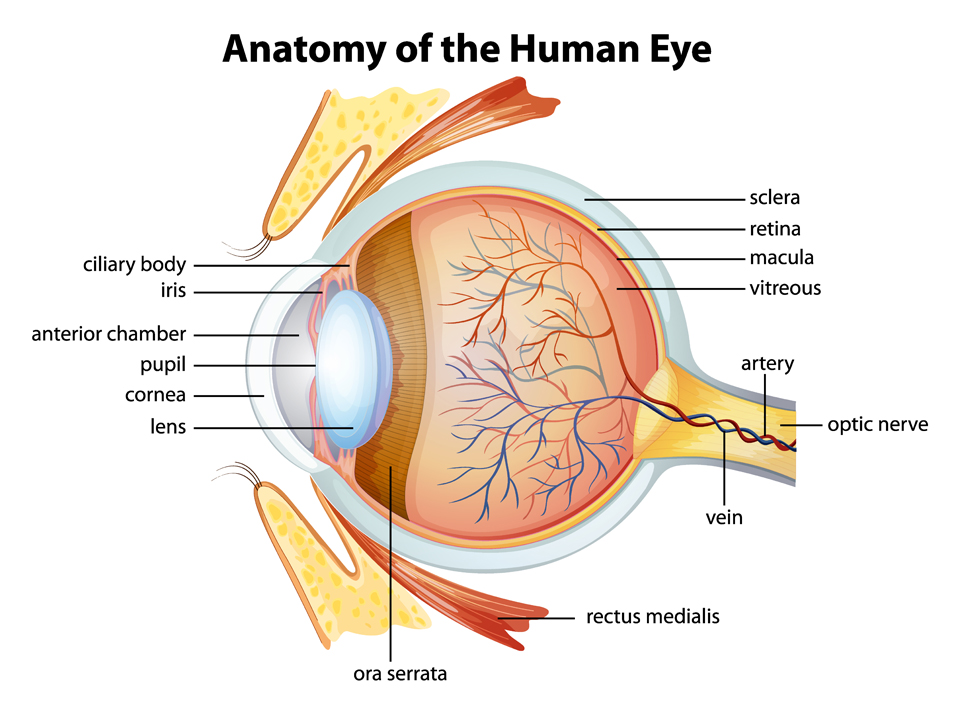
From the point of view of physics, the human eye functions very much like a camera. Light enters the eye through a transparent curved surface called the cornea, which bends (refracts) light rays. In fact, most of the refraction inside the eye occurs at the cornea itself. After passing through the cornea, light travels through a transparent fluid and reaches the eye lens. The eye lens is a convex lens, which further converges the light rays so that a sharp image is formed on the retina. The image formed on the retina is always real and inverted. Although the image is inverted, we see objects erect because the brain interprets and corrects the image.
Structure and Shape of the Eye
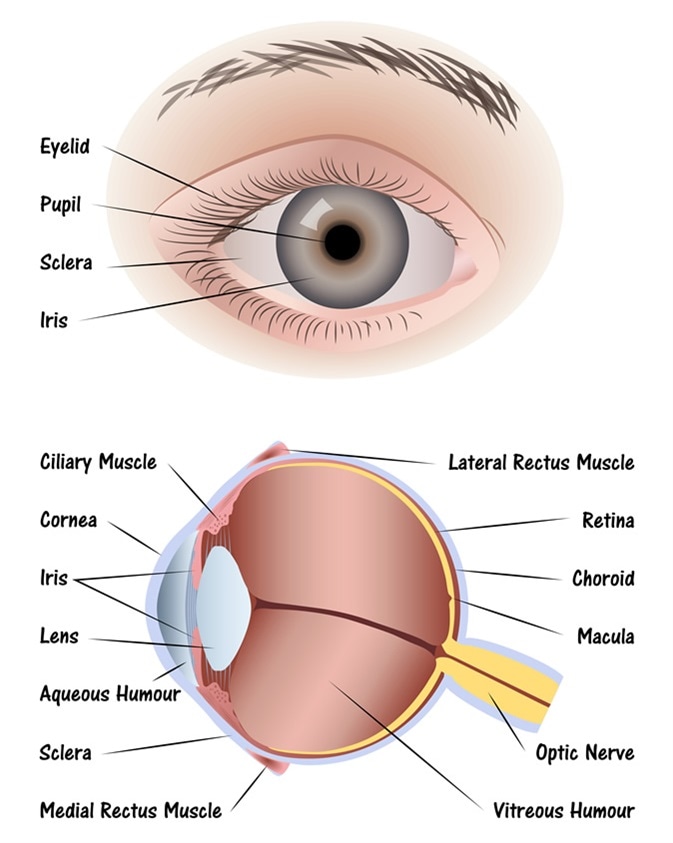
The eyeball is approximately spherical in shape and has a diameter of about 2.3 cm. At the front of the eyeball is the cornea, which forms a transparent bulge. Just behind the cornea lies the iris, a dark muscular diaphragm that gives the eye its colour. At the centre of the iris is a small opening called the pupil. The pupil controls the amount of light entering the eye, similar to the aperture of a camera. In bright light, the pupil becomes smaller to reduce light entry, while in dim light it becomes larger to allow more light to enter.
Role of Iris and Pupil
The size of the pupil is controlled by the iris. The iris contains muscles that automatically adjust the pupil size according to the intensity of light. This adjustment protects the sensitive retina from excessive light and ensures clear vision under different lighting conditions. Because of this function, the pupil is often described as a variable aperture. This mechanism is extremely important for both daily vision and examination questions.
Eye Lens and Accommodation
The eye lens is made of a soft, fibrous, jelly-like material that allows it to change shape. The change in shape of the eye lens is controlled by ciliary muscles. When these muscles relax, the eye lens becomes thinner, increasing its focal length. This condition helps us see distant objects clearly. On the other hand, when the ciliary muscles contract, the eye lens becomes thicker, decreasing its focal length and allowing us to see nearby objects clearly. The ability of the eye to adjust the focal length of its lens to see objects at different distances is called accommodation. However, the focal length of the eye lens has a minimum limit and cannot be reduced beyond a certain value.
Retina and Formation of Image
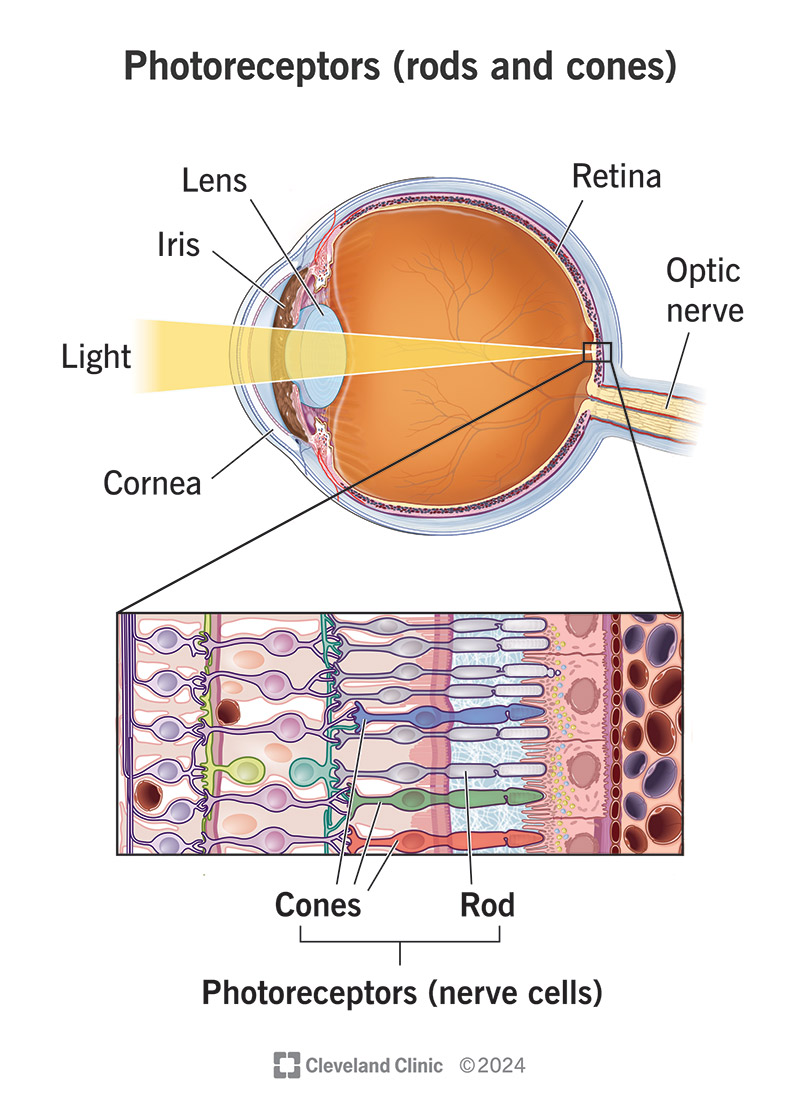
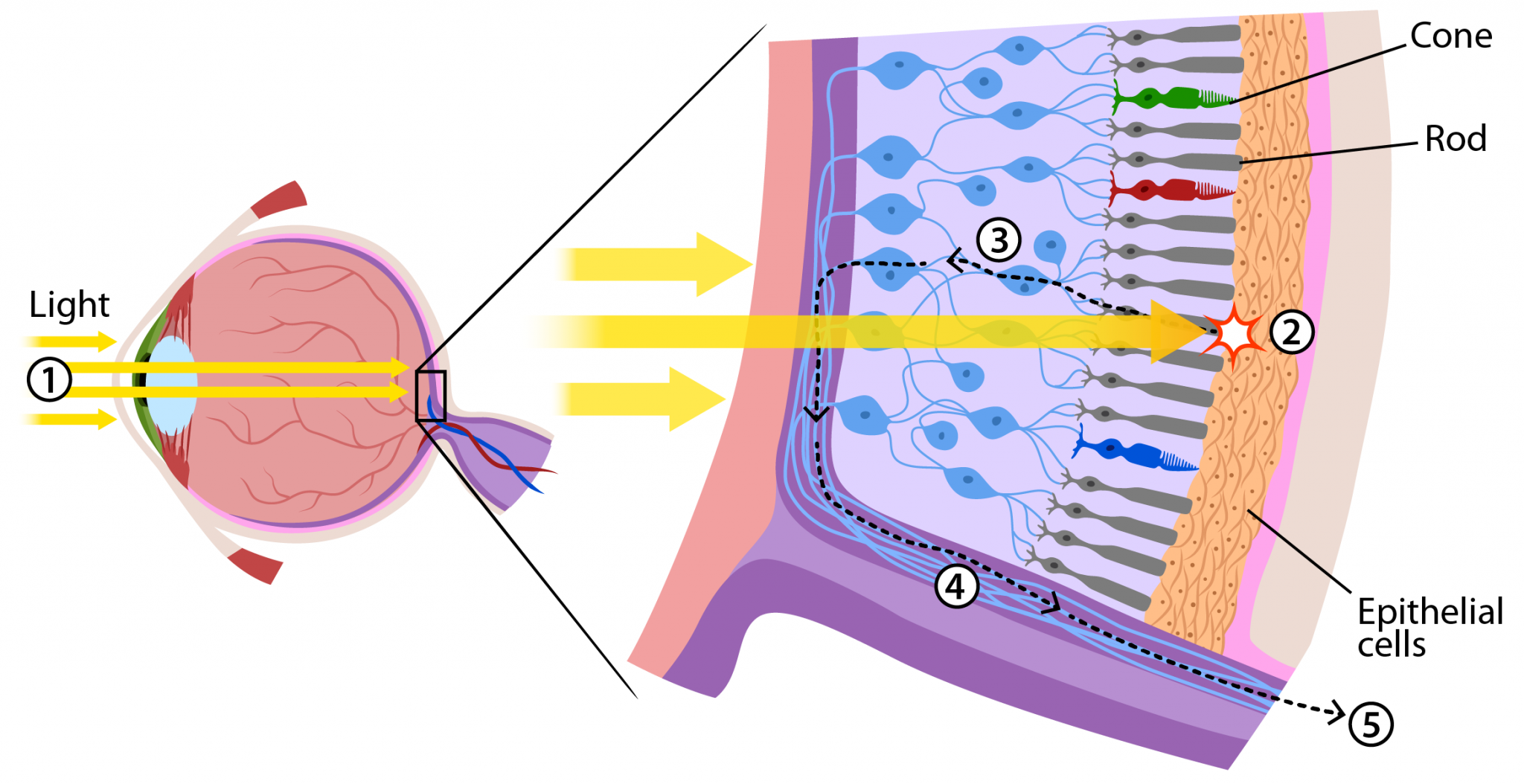
The retina is a light-sensitive layer located at the back of the eye. It acts as a natural screen on which the image is formed. The retina contains special light-sensitive cells called rods and cones. Rods are responsible for vision in dim light, while cones are responsible for colour vision and vision in bright light. When light falls on these cells, they generate electrical signals. Thus, the retina converts light energy into electrical impulses, making it a vital part of the visual system.
Optic Nerve and Brain Interpretation
The electrical signals produced in the retina are transmitted to the brain through the optic nerve. The optic nerve acts as a communication cable between the eye and the brain. The brain does not form the image; instead, it interprets the electrical signals received from the retina. This interpretation allows us to recognize shape, size, colour, and position of objects. Any damage to this system can result in visual impairment.
Near Point, Far Point, and Range of Vision
For a normal human eye, the minimum distance at which an object can be seen clearly without strain is called the near point. This distance is about 25 cm. The farthest distance at which objects can be seen clearly is called the far point, and for a normal eye, it lies at infinity. Therefore, a normal human eye can see objects clearly between 25 cm and infinity. These values are extremely important from an examination point of view.
Cataract and Loss of Vision
With increasing age, the eye lens may lose its transparency and become milky and cloudy. This condition is known as cataract. Due to cataract, light cannot pass properly through the lens, leading to partial or complete loss of vision. Cataract cannot be corrected by spectacles or medicines alone; it can only be cured by surgical removal of the cloudy lens, often replaced by an artificial lens.
Importance of the Human Eye
The human eye is considered the most significant sense organ because it allows us to see, identify colours, judge distances, and interact effectively with our surroundings. Without eyes, the perception of colours is impossible because colour vision depends on light entering the eye and stimulating the retinal cells. Thus, the eye plays a crucial role in our daily life as well as in understanding the physical world.
✅ Exam Assurance
If a Class 10 or NEET/JEE Foundation student carefully reads and understands this explanation, every MCQ given earlier can be solved confidently without memorization—only pure understanding.